
The Next Project Should Help Build the Next Workforce
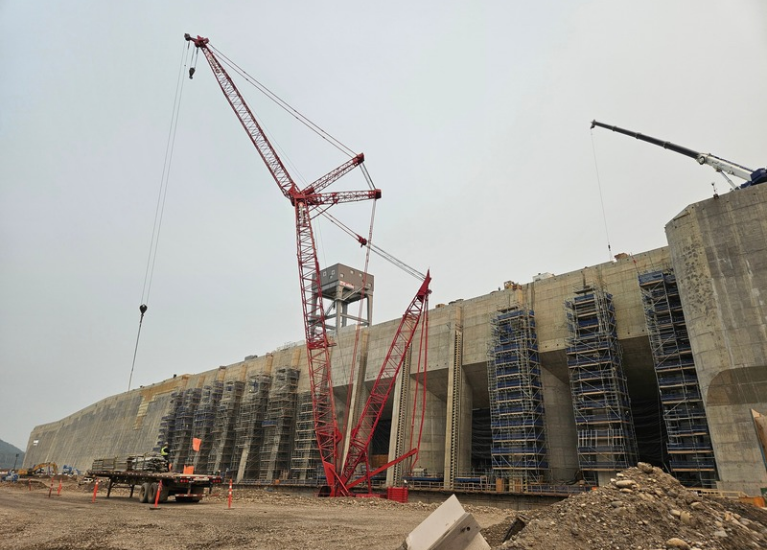
A major project needs skilled Millwrights. Becoming a skilled Millwright takes work on real projects.
It is not enough to announce future jobs and assume the workforce will be there when construction begins. Experienced people need to be brought together, new people need a route into the trade, and apprentices need opportunities to develop. Those decisions deserve a place in project planning, while there is still time to act on them.
For the Millwright Regional Council (MRC), organizing skilled labour is part of that work. It means helping contractors meet the demands of a project while building a union workforce that can carry its skills into the next one.
In Saskatchewan, UBC Millwright Local 1021 uses early discussions with contractors to forecast labour needs. The MRC and UBC Millwright network gives the Local access to experienced Millwrights beyond its own jurisdiction. Project demand also helps guide recruitment and training, bringing more qualified people into the union.
“Workforce capacity needs to be planned with the same discipline as every other critical component of a major project,” says Mark Beardsworth, Executive Secretary-Treasurer and Chief Executive Officer of the Millwright Regional Council. “Early engagement allows us to align experienced Millwrights with project demand, create meaningful opportunities for apprentices to develop, and strengthen the workforce available for future investment. The objective is not simply to staff the next project, it is to build the capacity to deliver the projects that follow.”
The immediate question is who can do the work. Early engagement creates room for another: who can develop through it? A contractor’s schedule helps the union understand when experience will be needed and where there may be room to bring apprentices forward under appropriate supervision. Waiting until the crew is required leaves less time for that discussion.
Apprenticeship cannot be separated from the work itself. Classroom instruction provides a foundation, but apprentices also need hours on the tools and guidance from experienced tradespeople. A training program without opportunities to put those skills to work leaves part of the job unfinished. Contractors and owners have a part to play in making those opportunities possible.
In Bruce County, Local 1592 Sarnia worked with Bruce Power and community organizations to create the Introduction to Millwrighting program at the Nuclear Innovation Institute. The six-week program combined classroom learning with hands-on experience and prepared participants for apprenticeship opportunities connected to demand in the energy sector.
The partners were doing more than recruiting for an existing skill set. They were helping people acquire one, with a connection to the industry that would need their work.
This does not mean asking apprentices to replace experienced Millwrights. Complex industrial work depends on people who already have the necessary skills. It means planning how those people can deliver the project while helping others learn, so that the next project has a stronger workforce to draw on.
Canada should expect major industrial investment to leave more than completed infrastructure. It should also leave people with stronger skills and a future in the trade. That work belongs in the project plan from the beginning.
Talk to the MRC about your upcoming projects while the workforce plan is still taking shape.
About the Millwright Regional Council
The Millwright Regional Council (MRC) is composed of twelve affiliated Local Unions of the United Brotherhood of Carpenters and Joiners of America (UBC) across Canada. The UBC Millwrights are vital partners in diverse industries such as energy, automotive, aerospace, food processing, and pharmaceuticals. ubcmillwrights.ca
For media inquiries, please contact:
Andrew Bredin
Director of Communications
Millwright Regional Council
416-757-5161
abredin@ubcmillwrights.ca
