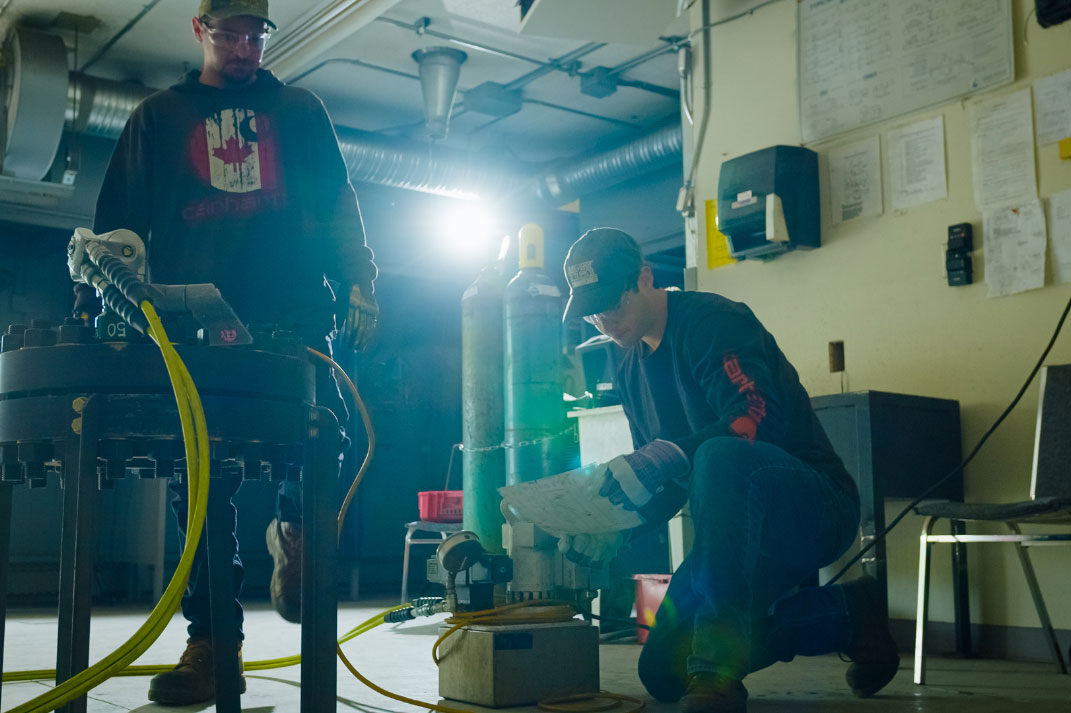

Become a UBC Millwright

Build a career in a skilled trade that keeps critical industries moving. UBC Millwrights earn strong hourly wages, train to high standards, and gain access to employer-funded pension, benefits, holiday pay, and vacation pay.

A career built on precision, safety, and opportunity.

Millwrights install, maintain, repair, and align the machinery behind manufacturing, energy, infrastructure, mining, food processing, pharmaceuticals, and other essential industries.

Becoming a UBC Millwright means joining a network of highly skilled problem solvers who are trained to consistent standards and connected to work across Canada.

See the hourly wage for your province and classification.

Use the wage lookup to see current hourly rates by province and classification. MRC does not publish total package dollar amounts on this page.

Beyond hourly wages, members receive pension, benefits, holiday pay, and vacation pay through negotiated collective agreements. In most listed provinces, these supports are employer-funded and add value without being deducted from regular pay.

Wage Calculator
HOURLY WAGE
Select above

Choose a province and classification to view the current hourly rate.

Effective May 2026

For information purposes only. Rates supplied by the applicable provincial Local are authoritative and prevail if there is any discrepancy.

More than an hourly wage.

Employer contributions support benefits, pension, holiday pay, and vacation pay, giving members value today and stability for the future.*

Hourly Wages

Competitive wages by province and classification, from apprenticeship through Red Seal and foreman roles.

Holiday & Vacation Pay

Additional value that helps members step away between projects and sustain long careers.

Benefits

Quality benefit coverage that supports health, wellness, families, and workforce stability.

Pension

Negotiated contributions help members build retirement security throughout their careers.

* British Columbia has a $1.74 hourly field-dues deduction. Saskatchewan has $1.85 per hour in working dues. Manitoba members contribute $1.34 per hour toward benefits and pension and $1.36 per hour in field dues.

Choose the path that fits your experience.

Whether you are exploring the trade, already trained, or looking to improve conditions at your workplace, start with the option that matches where you are today.

New to the trade

Learn what millwrights do, how apprenticeship works, and how to start building a skilled trade career while developing real jobsite experience.

Already trained or experienced

If you are already an apprentice, journeyperson, Red Seal millwright, or foreman, start your application so MRC can review your experience and connect you with the right next step.

Unionize your current workforce

If your current workforce wants to improve wages, benefits, safety, representation, or working conditions, start a confidential conversation with the MRC team.

Training that prepares you for real industrial work.

Every year, the MRC trains UBC Millwrights from first-year apprentices to superintendents, using comprehensive standards across disciplines and industries.

  • 1
    Start with apprenticeship
    Learn the foundations of the trade through classroom instruction, supervised jobsite experience, and practical skill development.
  • 2
    Build hours and confidence
    Develop the ability to install, maintain, troubleshoot, repair, and align complex industrial equipment.
  • 3
    Work toward Red Seal
    Certification supports recognized trade competency and career mobility across Canada.
  • 4
    Keep upgrading
    Ongoing training helps members stay current with technology, equipment, safety, and industry standards.

Safety, reliability, quality craftsmanship, and professionalism are at the core of the trade.

Safety

Training and standards help members work safely and protect the people around them.

Accuracy

Millwrights work with precision, technical skill, and attention to exact specifications.

Reliability

Disciplined crews show up where, when, and for as long as critical work requires.

Professionalism

Members bring skill, preparation, and pride to job sites across the country.

See the trade in action.

UBC Millwrights solve problems. They understand new technologies and bring specialized talents to the challenges that surface on industrial projects.

Watch member stories, training highlights, and jobsite footage that show the skill, safety, and pride behind the millwright trade.
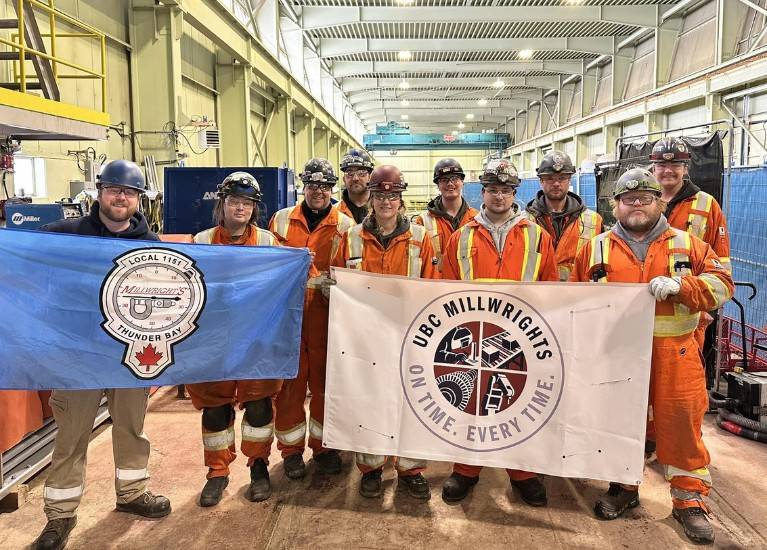

“At OPG we are impressed with the professionalism we see in the Millwrights that are deployed for work in our facilities.”

Employers count on UBC Millwrights for skilled training, pride in workmanship, safety, and strong career standards on the job.

Questions before you apply.

Find quick answers about apprenticeship, schooling, dues, dispatching, tools, travel, and unionizing your current workforce before you take the next step.

No. If you are new to the trade, the apprenticeship path is designed to help you learn while building practical experience. If you already have experience, the application form helps MRC route you properly.
Benefits and pension are employer-funded in most listed provinces. In Manitoba, members contribute $1.34 per hour toward benefits and pension. British Columbia, Saskatchewan, and Manitoba also have province-specific hourly deductions. Check the wage lookup for current details.
Yes. You can contact a Local directly, but the application form is the simplest starting point for most people interested in becoming a UBC Millwright.
If your workforce wants to discuss representation, wages, benefits, safety, or working conditions, use the confidential Unionize Your Current Workforce path.
Apprenticeships are based on hours worked and skills learned. The average apprenticeship takes four years.
No. The MRC provides all necessary training, and school costs are 100% reimbursed.
Each year during your apprenticeship, you will attend eight weeks of schooling at a local college.
No direct apprenticeship credit is given for pre-apprenticeship schooling, but those courses can improve your chances of being accepted. If you have completed provincial school terms, you will not need to repeat them.
No. All millwright work must be done through your Local union hall. This protects union job standards, supports safe working conditions, and ensures your hours count toward your apprenticeship, pension, and benefits.
Your Local union business representative is responsible for dispatching you to work. Your experience, training, and attitude help create continuing opportunities with union contractors and on projects brought to the MRC by the business development team.
Yes. Each month, you will pay the equivalent of one hour’s pay or less. These dues allow the MRC to provide service and training in each province and coordinated services across Canada, including a national training framework. Separate province-specific hourly deductions may also apply; check the wage lookup for details.
The list helps determine the order in which members are dispatched to work. After completing a job, you return to the list. Your position is determined by your apprentice level, skills, training, and other factors within your control. A union contractor may also name-hire you, helping hard-working millwrights with strong attitudes continue to receive opportunities.
Yes. Each millwright carries essential hand tools. During each year of your apprenticeship, you will receive a list of required tools so you can build a complete set over time. Tool grants may also be available to help with the cost.
Yes. Even as an apprentice, you can work anywhere in Canada as an MRC member. The workforce is fully mobile, so you may have opportunities to travel for work or choose to work in your home Local area.

Ready to build a career as a UBC Millwright?

Start your application today, or use the confidential workforce-unionizing path if your current workforce wants to improve its working conditions.

UBC Millwrights - On Time Every Time